Author name: د. سامي العدواني

خبير وباحث مهتم بصناعة السياسات و مواءمة أهداف التنمية المستدامة (SDGs)

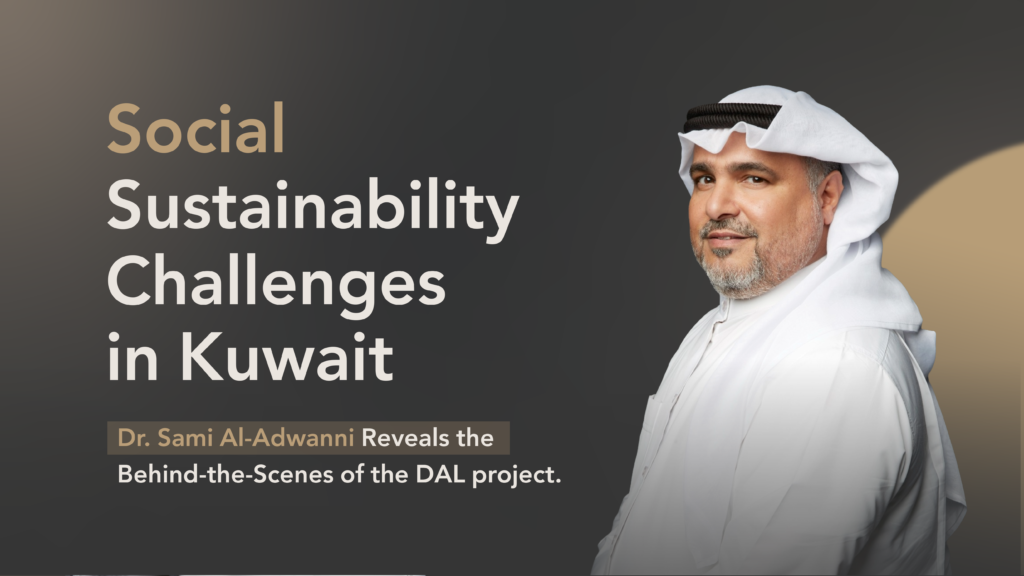
Social Sustainability Challenges in Kuwait | Dr. Sami Al-Adwani Reveals the Behind-the-Scenes of the DAL Project – Part 2

Why do some community initiatives fail despite their good intentions? And how do planning and data gaps affect sustainability? Dr. Sami Al-Adwani explains the real challenges behind the DAL project. In the second part of the “Café Arabi” interview, we continue the conversation with sustainability expert Dr. Sami Al-Adwani about the DAL project, but this time from a different angle: the angle of challenges, the gap between ambition and execution, and the transition from plans to real impact. Key topics discussed in this episode: Why do some plans fail despite their brilliance? The role and quality of data in decision-making. Funding challenges for long-term, knowledge-based initiatives. How to build community sustainability based on reality rather than wishes. DAL’s ambition to become a house of expertise and a knowledge reference in social sustainability. Extending the Kuwaiti model toward the Gulf and the wider region. This episode complements Part 1, which covered DAL’s philosophy and its role in community work. Watch Part 1 of the interview here: Social Sustainability in Kuwait: Dr. Sami Al-Adwani Explains the DAL Initiative Vision – Part 1

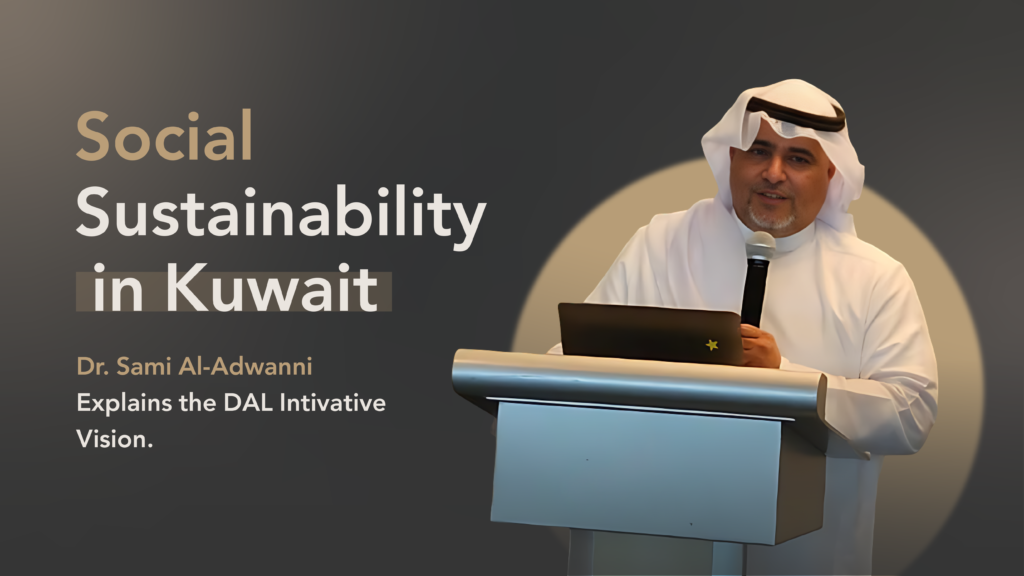
Social Sustainability in Kuwait: Dr. Sami Al-Adwani Explains the DAL Initiative Vision – Part 1

In this televised interview on Al-Arabi Channel, Dr. Sami Al-Adwani provides an in-depth analysis of the concept of social sustainability, explaining the philosophy behind the DAL initiative and its role in advancing community work in Kuwait. The interview highlights the vital role of research, analysis, and capacity building in fostering sustainable development, while emphasizing the importance of synergy between the state, the private sector, and civil society in Kuwait. Watch Part 2 here : Social Sustainability Challenges in Kuwait | Dr. Sami Al-Adwani Reveals the Behind-the-Scenes of the DAL Project – Part 2

المسؤولية المجتمعية للشركات (CSR): من مبادرات ظرفية إلى نضج مؤسسي وأثر مستدام

Corporate Social Responsibility (CSR): From Occasional Initiatives to Institutional Maturity and Sustainable Impact

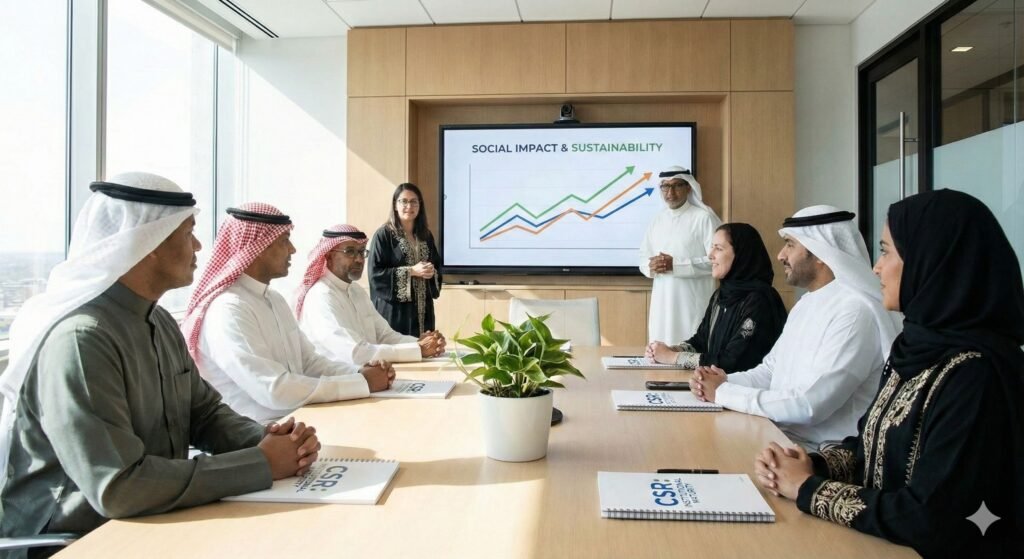
In an era where slogans multiply and reports expand, the question of skepticism remains legitimate: Are we witnessing a real shift in corporate behavior? Or are we merely seeing a repackaging of the traditional model in a more socially acceptable language? The answer is not measured by the number of initiatives, nor by the size of the allocated budgets. Rather, I see it closer to the extent to which Corporate Social Responsibility has been able to reshape the way of thinking and decision-making within the company. This is precisely where the greatest challenge lies: moving from CSR as a communication and marketing tool to CSR as a governing institutional methodology that creates measurable and sustainable impact. Why is CSR No Longer a Cosmetic Option? Companies no longer operate in an isolated economic vacuum; they have become actors within a highly interconnected social and environmental system. Their decisions are subject to unprecedented scrutiny from communities, investors, regulatory bodies, and global public opinion. With escalating climate challenges, widening inequality gaps, and rising social awareness, achieving profit is no longer sufficient to justify an institutional existence. The fundamental question has become: How were these profits achieved? And with what social and environmental impact? In this context, Corporate Social Responsibility has transformed from an optional practice or public relations activity into a strategic necessity that touches the core of business sustainability, risk management, and building long-term trust with stakeholders. The Concept of Corporate Social Responsibility: From the Periphery to the Core Corporate Social Responsibility (CSR) is defined as an organization’s commitment to managing its economic, social, and environmental impacts in an ethical and responsible manner, achieving a conscious balance between profitability and sustainable development. However, the fundamental difference between the traditional and contemporary understanding of the concept lies not in the definition, but in the position of CSR within the institutional structure: Traditional Understanding: CSR is a side activity, separate from the core business. Advanced Understanding: CSR is an integral part of the decision-making system, influencing policies, supply chains, human resource management, and investment models. Thus, the question is no longer: “What do we provide to society?” It has shifted to: “How do we operate within society? And by what logic?” Stakeholders: From Beneficiaries to Partners in Value One of the most important conceptual shifts in CSR is the transition from an exclusive focus on shareholders to managing balanced relationships with stakeholders, who include: Employees Customers Suppliers Local Community Regulatory Bodies The Environment (as an indirect stakeholder) The importance of this shift lies not only in its inclusivity but in its role as a strategic tool for risk management and opportunity creation. Neglecting employee safety turns into a productivity and legal crisis; ignoring the local community may lead to losing the “social license to operate”; and irresponsible practices in supply chains can evolve into cross-border reputation crises. Conscious stakeholder management means that CSR becomes a lever for long-term institutional stability, rather than an additional operational burden. Dimensions of Social Responsibility According to Carroll’s Pyramid: Integration, Not Sequence Carroll’s Pyramid, developed by Archie Carroll in 1991, is one of the most widely used frameworks for understanding the dimensions of CSR. However, the issue lies not in the model itself, but in its misapplication when treated as a rigid sequence rather than an integrated, overlapping system—a point Carroll himself emphasized in later reviews. The true value of the model lies in the integration of its four dimensions: 1. Economic Responsibility Profitability is the foundation upon which the company is built. However, contemporary economic responsibility does not mean maximizing profits at any cost, but rather achieving them efficiently and fairly, without imposing hidden costs on society or the environment. It is enough to know that pollution alone costs the global economy approximately $4.6 trillion annually to realize the magnitude of the invisible impact of irresponsible decisions. 2. Legal Responsibility Compliance with the law is the minimum socially acceptable standard. However, mature companies do not wait for legislation; they anticipate it and volunteer to adopt best practices before they are mandated, realizing that the law often lags behind reality. 3. Ethical Responsibility This is where the gray area between what is legal and what is fair begins. An ethical decision requires the courage to ask difficult questions: Is this decision fair? Does it consider the most vulnerable groups? Does it reflect declared values or circumvent them? 4. Philanthropic Responsibility Its value is measured by its connection to the company’s mission and the real needs of society, not by the volume of spending. The most impactful initiatives are those built on deep contextual understanding, rather than being based on emotional or seasonal reactions. ISO 26000: When Values Transform into Operating Systems The ISO 26000 guidance standard, issued by the International Organization for Standardization in 2010, provides a practical framework that transforms social responsibility from theoretical discourse into an institutional practice integrated into governance. Although it is not certifiable, it serves as an application reference adopted by tens of thousands of organizations worldwide, and its guidelines have been updated to include contemporary issues such as ethical artificial intelligence. ISO 26000 is based on seven guiding principles: Accountability Transparency Ethical Behavior Respect for Stakeholder Interests Respect for the Rule of Law Respect for International Norms of Behavior Respect for Human Rights Applying these principles means that CSR becomes part of the governance structure, not a parallel activity. Why is Corporate Social Responsibility a Strategic Investment? When CSR is integrated into the general strategy, it transforms from an operational cost into a long-term investment that reshapes the company’s relationship with its environment. Its importance is manifested in several tracks: Building institutional reputation and trust as moral capital that protects the company during crises. Reducing legal and operational risks through anticipation rather than reaction. Attracting and retaining talent in a job market that seeks meaning, not just a paycheck. Stimulating social innovation and opening new markets and business models. Achieving a sustainable competitive advantage that is difficult to replicate because it is

التحول الرقمي في العمل المجتمعي


من الأدوات إلى المنهج… ومن التنفيذ إلى الأثر المستدام

Digital Transformation in the Social Sector

From Tools to Methodology… From Execution to Sustainable Impact Do you sometimes feel that the challenges facing community work today have become more complex than the tools we use to manage them? This feeling is no longer individual; it has become a general characteristic of a sector facing increasingly intertwined social issues, rising demands for transparency and accountability, and constant pressure on resources, all set against higher expectations from donors, partners, and beneficiary communities. In this context, digital transformation is no longer an optional enhancement or a reactive measure to circumstances. It has become an indispensable institutional path if we want community work to maintain its effectiveness, enhance its impact, and ensure its sustainability. However, the fundamental question is not “Should we transform digitally?” Rather, it is: “How do we transform without losing the essence of the human and value-based mission upon which this sector is founded?” ⸻ What Do We Mean by Digital Transformation in the Social Sector? It is a mistake to reduce digital transformation to merely using electronic systems or technical platforms. At its core, digital transformation is a shift in mindset, management, and decision-making processes before it is a transformation of tools. It is a transition: • From work based on intuition and experience, • To work based on data, knowledge, and analysis, • Without compromising the human and ethical dimensions that distinguish community work from other sectors. Accordingly, genuine digital transformation encompasses five interconnected axes: Decision-making methods. Mechanisms of governance and accountability. Service delivery models. Impact measurement methods. Patterns of partnership and integration. ⸻ Why Does the Social Sector Need Digital Transformation Now? The accelerating variables surrounding the social sector force a reconsideration of traditional working models. Key variables include: The Complexity of Social and Humanitarian Problems Issues such as poverty, unemployment, health, or social fragility are no longer separate issues; they have become intertwined networks of causes and effects. Here, digital transformation emerges as a means to transition from reactive logic to proactive planning, and from general solutions to interventions based on a deeper understanding of reality. Rising Expectations of Donors and Partners It is no longer sufficient to speak only of executed activities; the focus has shifted to the achieved impact. Digital transformation enables the tracking of results, linking outputs to impacts, and providing reliable data that boosts confidence and supports partnership sustainability. Increasing Governance and Transparency Requirements In an environment characterized by increasing scrutiny, transparency and documentation have become essential conditions for continuity. Digital systems enable the standardization of procedures, reduction of operational risks, and the building of clearer and more disciplined accountability systems. Aligning Efforts with the Sustainable Development Goals (SDGs) Achieving these goals requires precision in planning, the ability to link activities with indicators, and tracking progress over the medium and long term—all of which are difficult to achieve without effective digital tools. ⸻ Opportunities for Digital Transformation in the Social Sector Digital transformation does not open just one door; it opens a system of strategic opportunities, most notably: Enhancing Governance and Transparency Documenting operations and tracking decisions boosts institutional confidence, reduces ambiguity and misunderstanding, and strengthens relationships with donors and the community. Deeper and More Realistic Impact Measurement Instead of relying on superficial quantitative indicators, digital tools allow for analyzing actual changes in the lives of beneficiaries and linking them to the implemented interventions. Increasing Decision-Making Efficiency Data-driven decisions are more accurate, more responsive to real needs, and less prone to uncalculated assumptions. Expanding the Scope of Influence Technology enables reaching new demographics, building cross-border partnerships, and utilizing models like digital volunteering, thereby doubling impact at a lower cost. Supporting Financial Sustainability By diversifying funding sources and developing innovative models such as digital donation, crowdfunding, and impact-based social investment. ⸻ Challenges: The Other Side of Digital Transformation Despite these opportunities, digital transformation in the social sector faces real challenges, most notably: • Weak institutional readiness. • A lack of specialized digital competencies. • Resistance to change within teams. • Information security risks and protection of beneficiary data. • The absence of a clear strategic vision. These challenges confirm that digital transformation is not a technical project, but an institutional change process requiring conscious leadership and an integrated methodology. ⸻ From Tools to Methodology: Digital Transformation as an Institutional Path Many experiences have proven that adopting technology isolated from a clear vision or integrated governance framework leads to limited results, and perhaps to complicating work rather than improving it. Real digital transformation requires: • Clear data management policies. • Rational digital governance ensuring compliance and ethics. • Serious investment in building human team capacities. • Integrating technology into the core of strategic planning, not treating it as a side project. When technology becomes part of the vision, not just an implementation tool, it transforms from an operational burden into a strategic lever for impact and sustainability. ⸻ Conclusion Digital transformation in community work is not a race to acquire the latest tools, nor a fleeting response to a management trend. It is a long-term strategic choice reflecting institutional maturity, awareness of changing contexts, and a genuine commitment to creating sustainable impact. The real bet is not on technology itself, but on our ability to employ it consciously, govern its use, and link it to the values and mission for which community work exists in the first place.

المساهمة في تقرير BOND الوطني للمسؤولية الاجتماعية والتنمية المستدامة – قطاع الاتصالات

Contributing to the BOND National Report on CSR and Sustainable Development – Telecommunications Sector

As part of DAL’s endeavors to enhance specialized knowledge and support the transition toward more mature and sustainable practices, DAL contributed to the preparation of the BOND National Report on Corporate Social Responsibility (CSR) and Sustainable Development. The report focused on evaluating the performance of the telecommunications sector in the State of Kuwait. DAL played a pivotal role in: This work contributed to providing an integrated analytical framework that assists companies in transitioning from traditional CSR initiatives to responsible, data-driven strategic leadership aimed at creating Shared Community Value (SCV). This contribution underscores DAL’s commitment to supporting organizations and sectors in developing ESG systems, enhancing reporting transparency, and elevating institutional readiness to keep pace with developmental transformations.

المساهمة في صياغة تقرير الحوكمة المستدامة (ESG لاتحاد مصارف الكويت)

Contributing to the Drafting of the ESG Report for the Kuwait Banking Association (KBA)

Enhancing Transparency – Supporting Digital Transformation – Embedding Social Responsibility Practices As part of its commitment to supporting good governance practices and developing sustainability strategies within the financial sector, DAL contributed to the preparation of the Environmental, Social, and Governance (ESG) Report for the Kuwait Banking Association (KBA), in partnership with the Sonbola Foundation. The report provided a methodological narrative and a comparative analysis of Kuwaiti banks’ performance in Corporate Social Responsibility (CSR). It reviewed trends in social spending, avenues for community investment, and governance practices, alongside benchmarking against international models. This work serves as a reference to assist the banking sector in: This collaboration represents a significant step in cementing the role of Kuwaiti banks as key partners in sustainable development. It acts as an extension of DAL’s role in building impact ecosystems grounded in data and specialized analysis.

مشاركة DAL في ملتقى شركاء جسور 2025 – المنامة

DAL Participates in the Jusoor Partners Forum 2025 – Manama

DAL participated as a strategic partner in the Jusoor Partners Forum 2025, held in Manama on October 30, 2025. The event was organized by ESCWA in partnership with the Regional Network for Social Responsibility and various development institutions across the Arab region. This participation aligns with DAL’s role in fostering development partnerships and supporting community sustainability efforts at the regional level. Held under the theme “Effective Partnership and a Way Forward,” the forum highlighted the importance of cross-sector collaboration in youth empowerment, skills development, and the creation of employment and entrepreneurship opportunities. The program also featured specialized panel discussions addressing best practices in youth engagement and capacity building. The event witnessed the announcement of 10 new partnerships under the 2026–2027 action plan. It also included a youth exhibition featuring university students and entrepreneurs, who were introduced to the Jusoor initiative and its partners while exploring opportunities for professional collaboration. DAL’s participation in this regional event underscores its ongoing commitment to supporting the sustainable impact ecosystem and strengthening partnerships that contribute to empowering Arab communities and advancing sustainable development pathways.

Developing the Foundational Strategic Plan for “Istidama” Association

DAL for Community Sustainability supported the Istidama Association—the first organization dedicated to Social Responsibility—in developing its foundational strategic plan. This support was provided to Istidama as an emerging entity focused on aligning institutional operations with the Sustainable Development Goals (SDGs). This collaboration serves as an extension of DAL’s role in empowering community organizations and building their institutional capacities. The team contributed to formulating an integrated strategic roadmap for the coming five years, encompassing the vision, strategic priorities, and impact pathways. The DAL team engaged in a series of strategic dialogues with the Association’s leadership, which included a meeting with Her Excellency the Minister of Social Affairs, Family and Childhood Affairs. The meeting addressed promising prospects for collaboration and the Association’s role in promoting a culture of sustainability. Discussions also covered mechanisms for preparing sustainability reports for Ministry-affiliated entities to support transparency, governance, and national compliance. This project exemplifies DAL’s commitment to supporting emerging entities and community institutions, equipping them to become effective contributors within the sustainable development ecosystem.

Launch of the Community Sustainability (CS) Guide: A Strategic Step to Establish Governance Standards in the Charitable Sector

The release of the Community Sustainability (CS) Guide stands as one of DALcs.org’s most significant achievements in the realm of standard-setting and the development of guiding frameworks for the non-profit sector in Kuwait. Conceived as a proactive initiative, the project aims to anchor community work as an evidence-based strategic practice. The concept was presented to His Excellency the Minister of Social Affairs, Family and Childhood Affairs, in the presence of the Board of Directors of the Union of Charitable Societies and Foundations, where it received widespread support and appreciation. Subsequently, this effort culminated in the development of the first methodological framework for producing disclosure and sustainability reports for charitable institutions. This was achieved through the design and issuance of the CS Guide in collaboration with the Union of Kuwaiti Charitable Societies and Foundations. The value of this guide lies in its function as: Thus, the guide contributes to transforming sustainability concepts from mere slogans into tangible, measurable, and applicable practices. It enhances the charitable sector’s capacity to operate with efficiency, transparency, and sustainability.

المشاركة في مؤتمر REVOLVE الإنساني – إسطنبول 2025

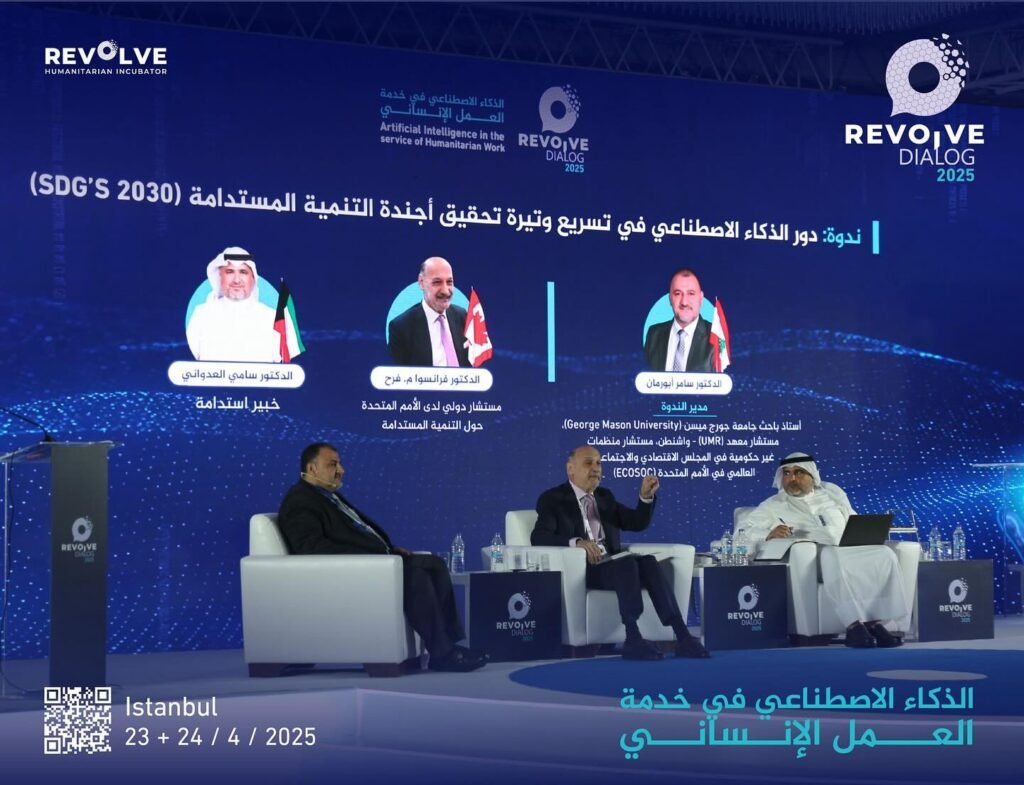
Participation in the REVOLVE Humanitarian Conference – Istanbul 2025

In May 2025, DAL for Community Sustainability participated in the inaugural REVOLVE Humanitarian Conference in Istanbul. The conference focused on: “The Role of Philanthropy in Accelerating the Achievement of the Sustainable Development Goals (SDGs 2030).” This participation aligns with DAL’s efforts to enhance the community sector’s presence in regional discussions regarding sustainability and governance. The conference served as a vital platform for networking with civil society organizations, charitable associations, and international humanitarian actors, as well as for exchanging expertise on philanthropic trends and strategies for directing impact toward sustainable development. During the proceedings, sessions featured extensive discussions and notable engagement regarding the future of the charitable sector and the potential to strengthen its role in implementing the 2030 Development Agenda. DAL presented a key working paper titled: “Opportunities for Charities to Align with the SDGs and Mechanisms for Implementation” Presented in collaboration with international expert Francois Farah, the paper reviewed practical models and applied frameworks designed to assist charitable institutions in developing their policies and programs to ensure genuine alignment with the Sustainable Development Goals. This participation reflects DAL’s vision of fostering integration between philanthropic and developmental work, and supporting community institutions in transitioning from traditional initiatives to sustainable impact that reflects both national and international transformations.

Scroll to Top