Author name: د. سامي العدواني

خبير وباحث مهتم بصناعة السياسات و مواءمة أهداف التنمية المستدامة (SDGs)

Innovative Solutions to Address Sustainable Funding Challenges in the Gulf Non-Profit Sector

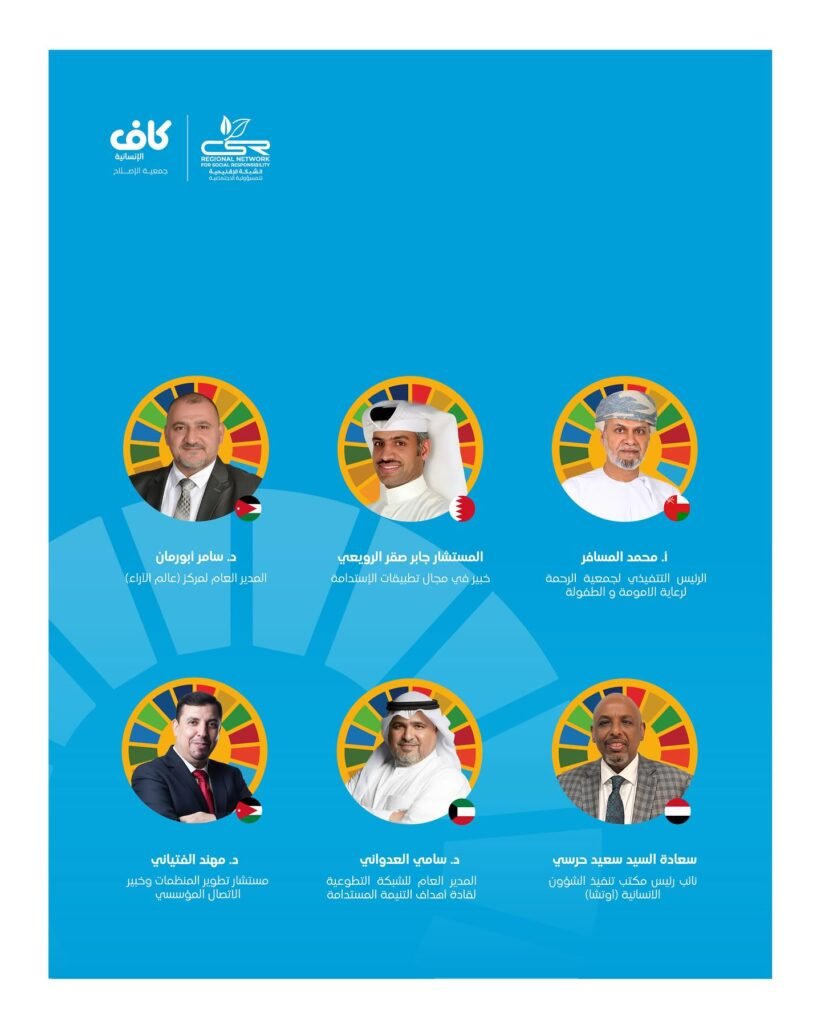
In light of the rapid transformations witnessed by the Gulf non-profit sector towards enhancing financial sustainability, DAL participated in the Kaf Humanitarian Foundation conference in the Kingdom of Bahrain. The organization presented a specialized methodological paper addressing the funding challenges facing non-profit institutions and exploring new horizons for sustainable financing. The participation took place during the “Horizons of Sustainable Development in the Gulf Non-Profit Sector” conference. The event focused on the growing shift from traditional donations to innovative financing tools aligned with international trends, including Social Impact Investing, and the construction of self-funding ecosystems that are more flexible and resilient. The paper presented by DAL highlighted the following: The presentation was attended by leaders of community institutions from the region and was held under the official patronage of the Undersecretary of the Ministry of Social Development in the Kingdom of Bahrain. This fostered an open dialogue regarding sustainable funding opportunities and future tools. This participation underscores DAL’s commitment to supporting strategic transformations within the non-profit sector. It also highlights its role in providing institutions with knowledge frameworks that assist in building funding models capable of withstanding challenges and achieving lasting developmental impact.

صون الريادة الإنسانية الكويتية… دروس من الماضي ورؤى للمستقبل

Preserving Kuwait’s Humanitarian Leadership: Lessons from the Past and Visions for the Future

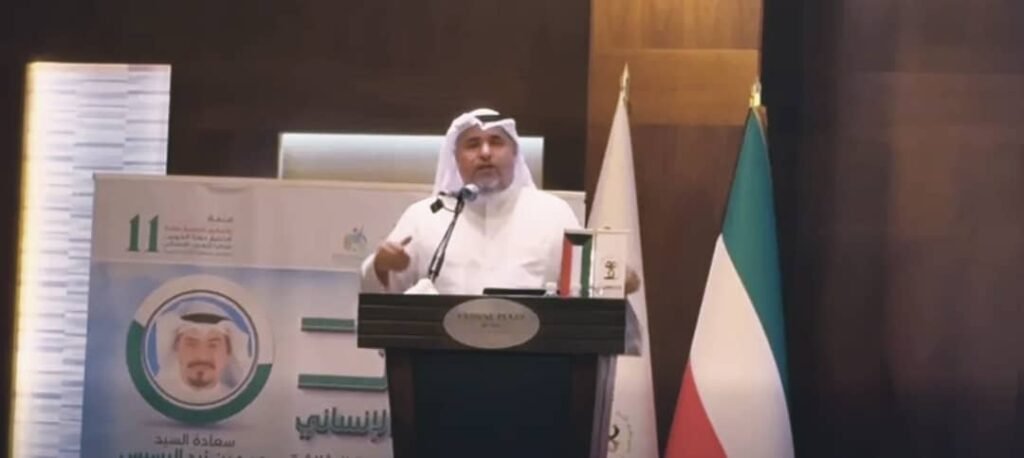
At the 2025 Humanitarian Action Forum, Dr. Sami Al-Adwani delivered a keynote titled: “Preserving Kuwait’s Humanitarian Leadership: Lessons Learned and Future Outlook.” He highlighted Kuwait’s long humanitarian journey—how the country transformed charitable impulses from emotional reactions into a deeply rooted national project built on justice, compassion, and human dignity. Dr. Al-Adwani emphasized that leadership is not preserved through slogans, but through review, renewal, and good governance.He noted that humanitarian work requires management tools as efficient as those used in development, for sustaining a mission begins with sound governance that balances values with impact, and intentions with methodology. He then outlined several key lessons that could shape the roadmap for the coming phase: He concluded with a set of important recommendations… In this direction, DAL continues to advance efforts to integrate humanitarian action with sustainable development practices, grounded in the belief that when generosity is managed with knowledge and awareness, it evolves from a temporary initiative into a lasting human impact that enriches communities.

في مشاركتها في ملتقى الكويت لحلول الاستدامة – النسخة الثانية، قدّمت DAL خبراتها في تصميم وتفعيل مبادرات الاستدامة المجتمعية،

A Voice from the Partners… Reflecting DAL’s Impact

During its participation in the Kuwait Forum for Sustainability Solutions – 2nd Edition, DAL showcased its expertise in designing and implementing community sustainability initiatives, within an event that brought together local and regional experts under the patronage of the Director General of the Public Authority for Youth. The forum’s chairman, Eng. Abdullah Hamoud Al-Ghareeb, appreciated Dr. Sami Al-Adwani’s participation and DAL’s contribution, highlighting the tangible impact of their collaborative work and the quality of their partnership. This recognition reflects what we strive for at DAL: a real impact that touches reality… and partnerships that enhance value, with sustainability as a conviction, culture, and practice. What was said about DAL at the forum: “I extend my sincere thanks to Dr. Sami Al-Adwani and DAL for community sustainability, as they played a major, vital, and important role in the success of the Kuwait Forum for Sustainability Solutions and also the 2nd Edition of the Sustainable Innovation Award. DAL has been and continues to be outstanding, with clear, community-oriented, and professional contributions. I wish them continued success and prosperity.”

Mother of Men

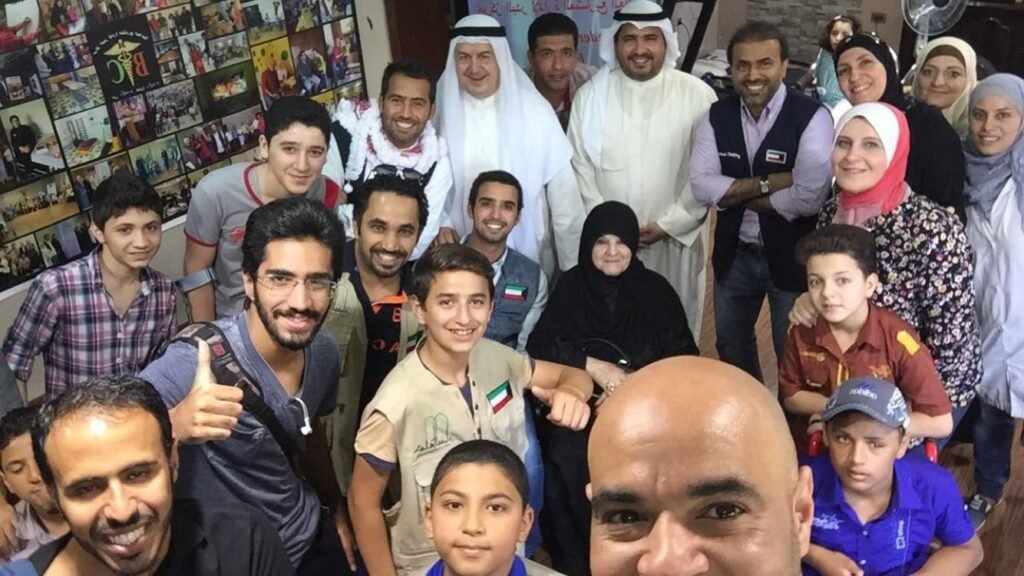
A story born in the field, and a title bestowed by young men when she—approaching eighty—joined them in their volunteer missions and humanitarian initiatives to aid refugees and comfort the displaced. She was a school of giving and of mending the broken spirits of the innocent. With her determination, she stood shoulder-to-shoulder with the youth, enduring the rough and distant roads alongside them. With her own hands, she offered aid to those in need, bolstering their resilience and easing their suffering. She was a mother to both the volunteers and the victims, embracing everyone with her immense patience and gentle words. She leaves us today after a life filled with profound impact, having raised her children, alongside her late husband, to follow in her noble footsteps. We bid her farewell at her funeral on Monday, October 14th, after she witnessed with her own eyes the end of tyranny in the Levant (Al-Sham) and the return of safety to its lands. Rest in peace, O role model for men. May God have mercy on you, for you taught us that the spirit never ages so long as the heart is alive with mercy; and that when a heart is sincere, it becomes a homeland for all who know kindness.

An Empowerment Journey with “Madrak” Towards Sustainable Impact

At DAL, we don’t see partnerships as mere temporary collaborations; we view them as investments in sustainable impact that truly touch people’s lives. With the “Madrak” initiative, driven by a genuine passion for serving the community in the field of communication disorders, we chose to be more than just a supporter. We aimed to be a strategic partner, helping build bridges with relevant entities, expand support networks, and strengthen the initiative’s presence as a trusted resource in its field. Our role focused on empowering the initiative to transform its mission into tangible impact through effective networking and developing a strategic relationship network that ensures continued success. Today, as we witness how “Madrak” has been able to extend its specialized services to wider segments of society, we believe this success would not have been possible without a purposeful partnership built on trust and a shared vision=“Peace be upon you. In this audio message, I extend my sincere gratitude and appreciation to DAL for its significant contributions in supporting the Madrak initiative. DAL played a fundamental role in enabling us to connect with relevant entities and supporters, and it actively contributed to establishing a strategic network with lasting impact. What DAL provided was more than support; it was a solid, profound addition that enhanced Madrak’s standing and presence. All of this positively reflected in expanding and maximizing the initiative’s impact in the community, particularly for those in need of services in the science of speech, language, and swallowing disorders. Thank you.”

Institutional Capacity Building: From One-Off Training to Sustainable Empowerment

In a rapidly changing world, organizations can no longer rely on scattered training programs. The real challenge is no longer teaching individuals a new skill, but creating a holistic institutional transformation that reshapes culture, systems, and structures—so that knowledge evolves into a sustainable capability able to adapt, endure, and generate lasting impact. This article presents a comprehensive perspective on the path of institutional capacity building. We explore the conceptual foundations and practical levels, followed by global frameworks and applied case examples, concluding with strategic pathways that support the shift from one-off training to sustainable empowerment. 1. Conceptual Framework of Institutional Capacity Building According to the United Nations, capacity building is “a process of developing and strengthening the skills, abilities, procedures, and resources that organizations and communities need to survive, adapt, and thrive in a rapidly changing world.”This definition shows that capacity building is not a temporary training event but a continuous process that transforms internal thinking and behavior to ensure resilience and renewal. Capacity building touches four main dimensions: 2. Levels of Capacity Building Capacity building is multi-layered, with each layer complementing the others: • Individual Level Developing skills and knowledge through training, workshops, coaching.Example: Upgrading staff skills in financial analysis or project management. • Organizational Level Improving structures, policies, internal systems, governance, and teamwork culture.Example: HR restructuring or strengthening governance frameworks. • Enabling Environment (Ecosystem Level) Interaction with the external context: laws, policies, donors, partnerships, alliances.Example: Forming networks with governments, engaging donors, influencing public policy. 3. From Training to Sustainable Empowerment Training is a temporary step to enhance individual performance.Sustainable empowerment is a long-term institutional process that enables an organization to manage its operations and decisions independently and effectively. Key characteristics of sustainable empowerment include: 4. Global Frameworks and Models USAID Focus: organizational, technical, and adaptive capacity.Approach: assessment → planning → implementation → monitoring.Strength: local ownership & sustainability.Limitation: more technical than cultural. INEE Focus: strengthening national and local capacities, especially in education and child protection.Strength: strong localization.Limitation: narrow scope. McKinsey Capacity Assessment Grid (CAG) Focus: seven standardized capacity domains.Strength: clear performance indicators.Limitation: requires accurate data. EFQM Excellence Model Focus: institutional quality, leadership, strategy, resources, processes, results.Strength: continuous improvement.Limitation: resource-intensive and complex. Comparison Table: Global Capacity Frameworks Framework Primary Focus Assessment Method Strengths Limitations USAID Organizational & technical capacity Assessment → plan → implement → monitor Comprehensive, sustainable Technical focus INEE Local/national capacity in education Capacity & cost estimation tools Strong localization Narrow sector McKinsey CAG 7 capacity domains Maturity grid Clear KPIs Data-heavy EFQM Institutional quality Maturity matrix Leadership-centered improvement Needs large resources Challenges on the Path to Sustainable Empowerment Challenge Description Impact Example Over-focus on skills Ignoring systems & structures Short-term results Training without institutional reform Weak resources & controls Poor project management Operational fragility Local NGO struggling with finance Resistance to change Rejecting new systems Slows transformation Refusing digital HR systems Lack of holistic strategy Fragmented efforts Low long-term impact Workshops without a long-term roadmap Strategic Pathways to Strengthen Sustainable Empowerment Strategic Pathway Key Actions Expected Outcomes Examples Build internal support units PM, M&E, communication Strong internal competence M&E unit in a Gulf NGO Develop systems & structures HR, governance, restructuring Autonomy & efficiency Updated HR system Strategic partnerships Long-term alliances Knowledge transfer Partnership with global agencies Digital transformation Tech integration, innovation Flexibility & service quality Digital project management Monitoring & evaluation KPI systems & learning loops Accountability & improvement Regular impact reports Conclusion Institutional capacity building is a long-term transformation journey that extends far beyond training. It is an organizational repositioning that connects individuals, systems, and the broader environment. Institutions that embrace sustainable empowerment become more capable of continual learning, resource management, and adaptive leadership. Here lies the role of DALcs.org—not just a training provider, but a strategic partner offering structured thinking, global frameworks, and integrated solutions for organizations seeking deep, lasting impact. Leaders who recognize that success is measured by the depth and sustainability of impact are the ones shaping a more resilient and vibrant future for their institutions and communities.

دور البحث العلمي في تعزيز الاستدامة المجتمعية وتطوير القطاع غير الربحي

The Role of Scientific Research in Advancing Community Sustainability and Developing the Nonprofit Sector

The nonprofit sector—often referred to as the third sector or civil society—serves as a foundational pillar in building modern communities and enhancing societal well-being. Its role extends beyond charitable and humanitarian services to include social development, environmental protection, cultural enrichment, human rights advocacy, and other vital areas. As societal challenges grow increasingly complex and diverse, an essential question emerges: How capable is the nonprofit sector of keeping pace with these challenges and maximizing its impact?This brings forward a critical discussion: Is scientific research a luxury that nonprofits can forgo due to limited resources, or is it a strategic necessity for ensuring effectiveness and long-term sustainability? This article addresses the concerns often raised about integrating scientific research into nonprofit work, emphasizing that these challenges can be overcome through collaborative strategies and strong partnerships between academia, research institutions, nonprofits, and donors. Investing in research is ultimately the most effective path to empower the nonprofit sector to confront contemporary challenges and achieve sustainable social impact. The Importance of Scientific Research in the Nonprofit Sector Scientific research is the primary engine of progress in all fields—and the nonprofit sector is no exception. Integrating evidence-based approaches enables organizations to evaluate their programs, identify real community needs, and develop innovative solutions to complex challenges. The significance of research in the nonprofit sector is reflected in several key dimensions: 1. Enhancing Decision-Making and Identifying Needs In a field where resources are limited and community needs are vast, evidence-based decision-making becomes essential. Research—through surveys, field studies, and analytical assessments—provides accurate, reliable insights into social challenges, targeted populations, and the effectiveness of existing interventions. Through structured scientific studies, organizations can identify the actual needs of local communities. This ensures that decisions are not based merely on assumptions or individual experience, but on objective, data-driven understanding of reality. Field research, foundational studies, and applied research are indispensable tools for shaping and prioritizing community needs. 2. Improving Operational Efficiency and Effectiveness Research does not only identify problems—it also helps discover the best ways to solve them. Applied research enables nonprofits to: Research can reveal cost-effective approaches to deliver high-quality services or highlight factors that increase beneficiary engagement. In short, research is a critical component of operational excellence. 3. Supporting Innovation and Adapting to Change Nonprofits operate in a dynamic environment shaped by evolving community needs, new technologies, and policy changes. Research provides a platform for exploring innovative solutions, encouraging creative thinking, and testing new approaches that enable organizations to adapt effectively. For example, research can explore how emerging technologies—such as artificial intelligence and big-data analytics—can enhance outreach, optimize service delivery, or expand impact. Research is not an end in itself, but a strategic pathway to a more innovative and prosperous future. 4. Building Partnerships and Strengthening Integration Research serves as a bridge connecting the nonprofit sector with government institutions, academia, and the private sector.When nonprofit organizations rely on solid scientific evidence, they gain greater credibility with donors, governmental bodies, and corporate partners—facilitating funding, collaboration, and policy alignment. Joint research helps align efforts around shared community priorities and contributes to translating research findings into practical programs, products, and services. This integration is vital for advancing national innovation and ensuring sustainable societal outcomes. 5. Enriching Knowledge and Building Human Capacity Scientific research enriches the body of knowledge related to nonprofit issues and attracts graduate students, researchers, and academics to study the sector’s challenges and opportunities. Research outputs provide nonprofits with modern frameworks and actionable tools to strengthen: This ongoing capacity building ensures that the nonprofit sector continues to evolve, localizes knowledge, and transforms it into added value that improves people’s lives and supports national development. Challenges and Concerns Facing Research in the Nonprofit Sector Despite its importance, several concerns often arise regarding the integration of research into nonprofit work. These challenges, while real, do not diminish the strategic value of research; rather, they highlight the need for innovative approaches to address them. 1. The Gap Between Academic Research and Practical Application Academic research is often viewed as theoretical, overly technical, or misaligned with the day-to-day realities of nonprofits. This gap leads some to question the usefulness of research as an investment. Bridging this gap requires enhanced collaboration between universities, research institutions, and nonprofits. Nonprofits must be involved from the outset—defining research priorities, shaping questions, and guiding study design—to ensure relevance and applicability. Knowledge transfer mechanisms, simplified research summaries, and practitioner-friendly outputs are essential for unlocking the value of academic research. 2. Limited Funding and Institutional Support Many nonprofits consider research a luxury due to tight budgets and competing priorities.However, research should be viewed as a long-term strategic investment. Solutions include: These strategies strengthen the national innovation ecosystem and enhance sustainability. 3. Shortage of Specialized Researchers There is often a shortage of researchers who understand both scientific methodology and the unique nature of nonprofit work. This challenge can be addressed by: Such efforts ensure a growing pool of researchers specialized in nonprofit development. 4. Difficulty Measuring Social Impact Measuring social impact is inherently complex.Although challenging, it is achievable by developing: Success stories and case studies also help demonstrate the added value of research and justify investment. Recommendations and Future Directions To maximize the benefits of scientific research in strengthening the nonprofit sector, several strategic recommendations should be adopted: 1. Strengthen collaboration between research institutions and nonprofits This includes formal partnerships, joint research initiatives, applied studies, and shared platforms that bring academics and practitioners together.Specialized intermediaries—such as DAL—can play a pivotal role in linking theory with practice. 2. Allocate research and development budgets within nonprofit organizations Even small initial allocations can support: Donor-supported research funds are especially critical. 3. Develop training programs for researchers and nonprofit professionals These programs should focus on relevant research methodologies, translating findings into actionable policies, and equipping nonprofit staff with analytical skills. 4. Create knowledge-sharing platforms Centralized databases, open-access publications, and public dissemination events will ensure research findings reach stakeholders and remain actionable. Conclusion Scientific research is the backbone of effective nonprofit work. It guides decision-making, amplifies resource efficiency,
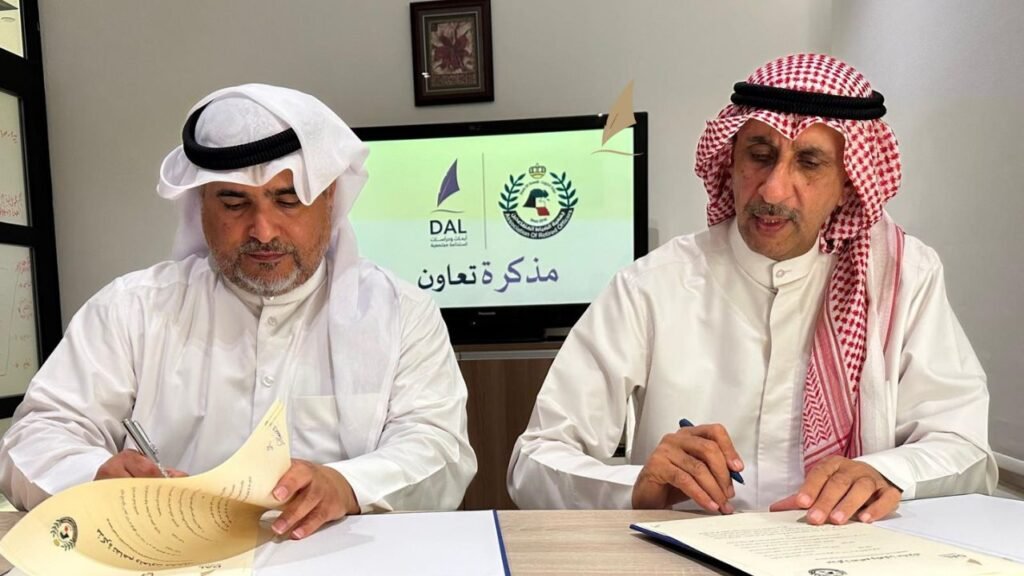
توقيع بروتوكول تعاون بين جمعية الضباط المتقاعدين مع مركز DAL لأبحاث ودراسات الاستدامة المجتمعية

Cooperation Protocol Signed Between Retired Officers Association and DAL for Community Sustainability Research and Studies

A cooperation protocol has been signed between the Retired Officers Association and DAL for Community Sustainability Research and Studies. This follows the acquisition of official approvals from the Ministry of Social Affairs, Family and Childhood Affairs. The agreement aims to strengthen partnerships in the fields of research, studies, and the development of community initiatives. This understanding reflects the commitment of both parties to utilize professional and community expertise for the public good, and to explore new horizons for integrating institutional work with field experience for the benefit of society. The protocol was signed on behalf of the Association by the Chairman of the Board, Major General (Ret.) Faisal Al-Jazzaf, while Dr. Sami Al-Adwani represented DALcs.org.

أربع تاءات تصوغ بيت الخبرة وريادة المستقبل

Four Ts That Shape a House of Expertise and Lead the Future

It was not an ordinary visit—nor one of those moments that slip quietly into the pages of the calendar and fade away. It was a different kind of journey to a rising institution. At first, I imagined I would walk into freshly painted offices, see neatly arranged papers on polished desks, and hear the usual talk about projects still waiting to be completed. But what I encountered was far deeper than walls and workspaces.I found myself standing before a coherent vision—before a house of expertise emerging from the womb of an idea—and before four pillars lifting the structure as if writing a new chapter in the book of institutional leadership. Four Ts, woven with remarkable precision: Consulting, Studies, Capacities, Initiatives.They were not mere subheadings in a corporate profile; they were the lifeblood circulating through the institution, giving vitality to its growing body. Each T speaks for itself—yet none is complete without the others. And when the compass, the mind, the hands, and the heart unite, the house becomes a true home of expertise—one that does not merely observe direction but shapes it, does not stop at ideas but turns them into reality, and does not settle for merely following but aspires to become a force that uplifts and inspires other institutions. This scene reminded me of Ibn Khaldun’s view of human civilization, which he saw as the fruit of harmony between thought and action—between politics, society, and economics.And it seemed that this rising institution understood deeply that fragmentation scatters effort, while integration is the only path to the future. Hence these four Ts came intertwined and inseparable, like the columns of one house—if one leans, balance falters, but when all stand upright, the ceiling rises proudly. Walking through the corridors, the steps were anything but casual.Everything felt intentional—every detail calculated. The path of the compass was not born of improvisation but of accumulated wisdom and a genuine desire for sustainability. When I sat with the team, their words carried more than enthusiasm; they carried something resembling a profound belief in the mission. They spoke of the future as if it were a tangible present and planned for other institutions as if they were extensions of their own. This, in its purest form, is entrepreneurship: to see the future before others do, and to believe that your project is not yours alone, but a contribution to the entire nation. For them, consulting was not a report to be written, but a path to be unlocked.Studies were not static tables, but deep readings that capture what others overlook.Capacities were not training sessions, but structured human and institutional development.And initiatives were the spirit that keeps everything alive—driving movement, preventing stagnation, and revitalizing the institution whenever it slows. In this institution, I saw a reflection of what our renaissance must look like:a fully integrated house of expertise, uninterested in temporary glamour, yet building a solid foundation that reaches beyond the present into the horizon.In today’s world, institutions are not measured by their size or the number of their employees, but by their ability to elevate others—by being a source of inspiration, a home of knowledge, and a place where trust is born. In the faces of the young professionals leading the effort, I saw echoes of our early builders—those who combined thought with action, dream with reality.I remembered the words of Imam Ali, may Allah be pleased with him: “A person’s worth is what they excel in.”And I thought: this institution knows what it excels at—and insists on doing it with the highest standards of quality. The narrative of its institutional journey was genuinely captivating.You do not walk into walls—you walk into a story unfolding chapter by chapter:A spark of an idea carried by those who believed in change.Then came the studies, giving the idea wings—a scientific backbone and a clear vision.Consulting placed feet on the path, giving other institutions a compass to navigate the fog.Capacities reminded us that an idea without capable people remains ink on paper.And when spirit was needed, initiatives ignited passion and kept the institution in constant motion. Four Ts—but not four parallel lines.They are four rivers flowing into one sea.If the land drinks from them, it blossoms; if they dry, steps stumble.This is their beauty: diversity without division, unity without uniformity. Someone may ask: What makes this institution different?The answer: it did not begin with the question “What do we do?” but with “How do we serve?”It did not confine itself within profit and loss, but expanded its vision to uplift institutions, nurture generations, and plant good wherever it goes. Having visited many places and sat through countless presentations, I can say with certainty:This visit was unlike any I have seen—not in its form, but in its meaning and impact.History is not written by years alone but by the moments that change course—by ideas that lay foundations for a new world. Here, in this rising institution, I felt I was before a project that transcends time—a house built on four solid pillars,a compass that always points north,and hearts that believe sustainability is not a slogan, but a lived spirit. Perhaps the most fitting ending is the words of Malik Bin Nabi:“Our problem is not the lack of resources, but the lack of ideas.”This institution is living proof that when ideas are shaped with vision, reinforced by pillars, and infused with values, they become a transformative force capable of achieving the extraordinary. My visit was not a mere stop at an office.It was an entry into a house of experts—born from the womb of a dream—walking with steady steps, raising the banner of leadership,and declaring that when four Ts come together,they do not merely build an institution—they lay the foundation for a new era of institutional renaissance.

Scroll to Top